Why Firewalls Alone Don't Protect Your IT Infrastructure
Understanding what firewalls can't defend against and what else you need
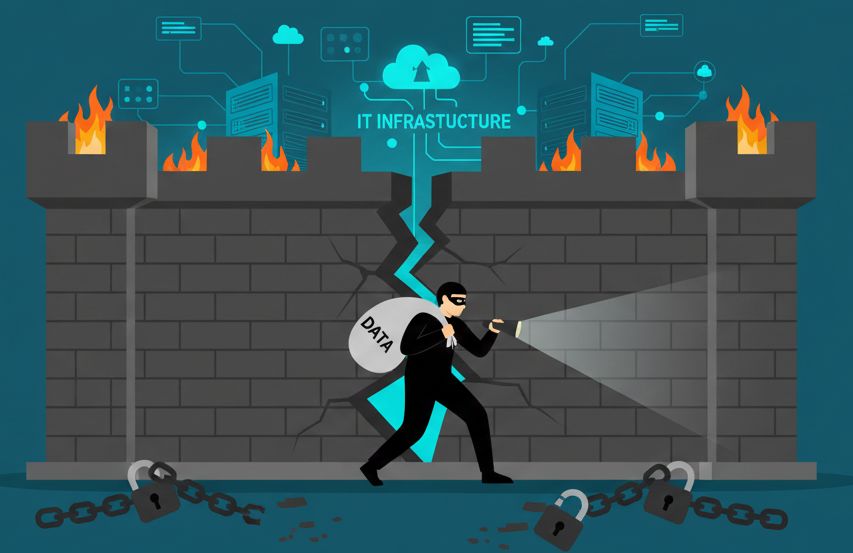
Your IT provider installed an enterprise firewall. The network security checklist shows green. The dashboard displays blocked intrusion attempts, and those numbers make it feel like the firewall is actively defending your business. It is, but only against a specific category of threats. Most successful attacks against small and medium businesses don't try to break through the firewall. They walk right past it.
Firewalls operate at the network layer, controlling which IP addresses can connect to which ports. They're excellent at this job. They block unauthorized direct connections to your database servers. They prevent external access to administrative interfaces. They filter traffic based on protocol and port number. What they can't do is inspect the content of allowed traffic, evaluate user behavior, or detect compromised credentials being used correctly.
Application Layer Attacks Pass Through
Your web application runs on port 443. The firewall allows this because your business requires it. Customers need to access your website, place orders, check their accounts. The firewall sees encrypted HTTPS traffic and permits it, as configured. It has no visibility into what that traffic contains. SQL injection attacks, cross-site scripting, authentication bypasses, and session hijacking all travel inside legitimate HTTPS connections that the firewall correctly allows.
An attacker discovers your customer portal has a broken access control vulnerability. They modify a URL parameter to view other customers' order histories. This entire attack happens through normal web requests to an allowed port using permitted protocols. The firewall functions exactly as designed, and the application gets compromised anyway. The firewall operates at layer 3 and 4 of the network stack. Web application attacks occur at layer 7. They're solving different problems.
Compromised Credentials Look Legitimate
An employee receives a phishing email that looks exactly like your company's password reset notification. They enter their credentials on the fake site. The attacker now has valid credentials for your systems. When they log in using these stolen credentials, the firewall sees legitimate authentication from a valid user account. It allows the connection because that's its job. The firewall can't distinguish between the real employee working from home and an attacker using stolen credentials.
This scenario plays out constantly. Credential phishing remains one of the most effective attack vectors specifically because it bypasses network security controls. The firewall configuration is irrelevant when the attacker has legitimate credentials. They authenticate normally, access permitted resources, and the security monitoring sees nothing unusual because from a network perspective, nothing is unusual.
Insider Threats Operate Inside the Perimeter
A disgruntled employee decides to exfiltrate customer data before leaving the company. They have authorized access to these systems as part of their job responsibilities. The firewall sees an internal user accessing internal resources they're permitted to access. The employee downloads files, copies databases, exports customer lists. All through legitimate channels, using their actual credentials, accessing systems they're authorized to use. The firewall provides zero protection because the threat originates inside the protected perimeter.
Even non-malicious insider incidents bypass firewalls. An employee's laptop gets infected with malware while they're working from a coffee shop. They return to the office and connect to the corporate network. The malware now operates inside your network perimeter with the same access level as the employee. The firewall already granted access because it's the employee's legitimate device.
Social Engineering Bypasses Technical Controls
An attacker calls your help desk claiming to be a manager who forgot their password. The help desk verifies the caller knows the manager's employee ID and birthdate, both pieces of information available on LinkedIn. They reset the password and email it to an alternate address the caller provides. The attacker now has legitimate credentials obtained through manipulation rather than technical exploitation. The firewall was never involved.
Technical security controls like firewalls can't prevent human decisions. Social engineering attacks target people, not infrastructure. They exploit trust, authority, and urgency to bypass security procedures. The most expensive firewall in the world won't help when someone simply hands over their credentials because a convincing caller claimed to be from IT support.
What Actually Protects Infrastructure
Comprehensive infrastructure security requires multiple defensive layers working together. Firewalls provide the perimeter. Application security testing finds vulnerabilities in your web applications that attackers can exploit through allowed traffic. Intrusion detection systems monitor network behavior for anomalies that might indicate compromise. Endpoint protection secures individual devices against malware. Multi-factor authentication makes stolen passwords insufficient for access. Security awareness training helps employees recognize social engineering attempts.
Log monitoring and security information systems track what happens inside your network, detecting unusual access patterns or data movement. Vulnerability scanning identifies missing patches and configuration errors. Regular security assessments test your defenses from an attacker's perspective, finding gaps before they're exploited. Access controls enforce least privilege, limiting what compromised accounts can access. Data loss prevention monitors sensitive information leaving your network.
The Defense in Depth Principle
Security professionals talk about defense in depth because no single control stops all attacks. Each layer addresses different threat categories. Firewalls block network intrusions. Application security stops code-level exploits. Endpoint protection prevents malware. Access controls limit credential compromise impact. Monitoring detects breaches when they occur. No layer is perfect, but multiple imperfect layers create robust protection.
Businesses that rely solely on firewalls have security theater rather than security. The firewall dashboard shows activity, management feels secure, but the actual attack surface remains largely unprotected. Real security requires understanding what each control does and doesn't defend against, then implementing complementary controls that address the gaps.
Assess Your Complete Security Posture
CrisisWall provides security assessment services that examine your actual attack surface, not just network perimeter controls. We test your web applications, APIs, and business systems for vulnerabilities that bypass firewall protection.
Schedule a comprehensive assessment:
Your firewall is working. Let's make sure everything else is too.